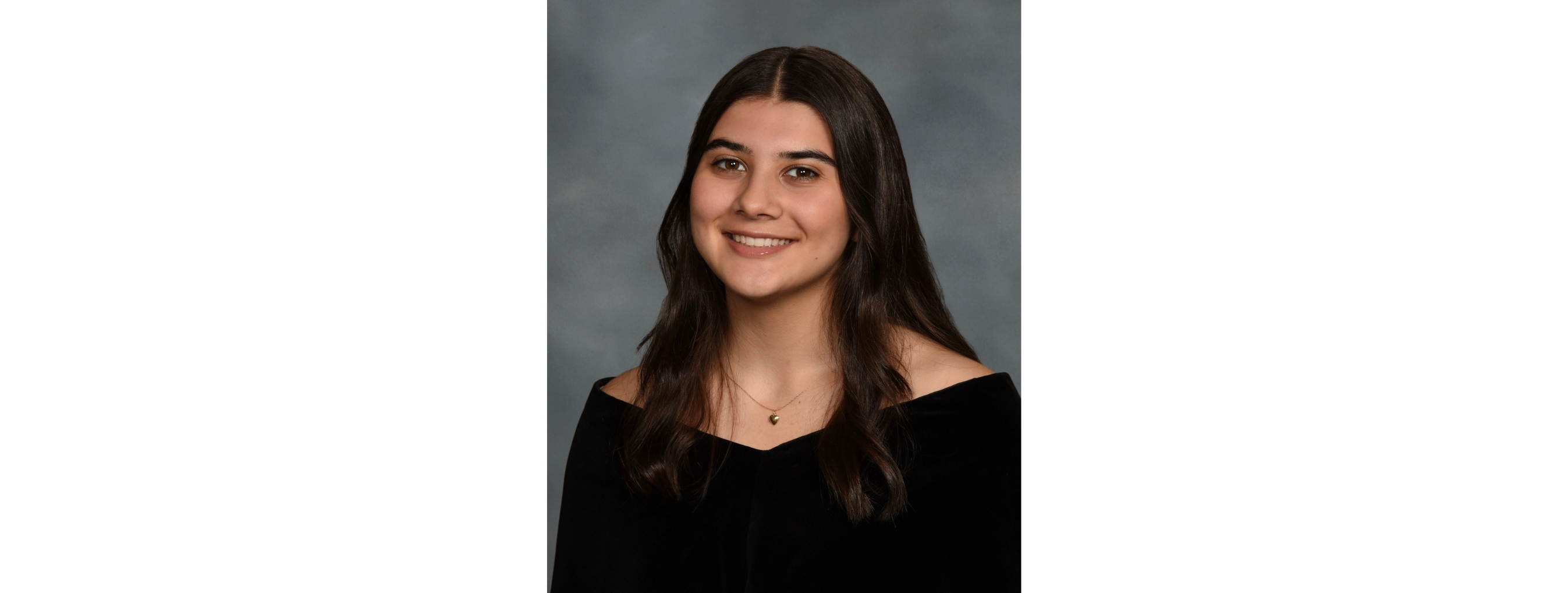
Alexandra Baranyai ('28), a Biology and Health and Societies double major, spent the summer with Dr. Sarah Gullbrand (Department of Orthopaedic Surgery) studying spinal disc degeneration. Her research training experience was supported by the University Scholars program.
This summer, with the support of a University Scholars research training grant, I participated in multiple projects within the Gullbrand Lab. While the lab is broadly interested in studying lower back pain, we are specifically focused on tissue engineering a living disc replacement. My primary project was to make and test engineered cartilage disc-endplates, but I also helped with projects related to CRISPR regulation and cell nutrition. Involvement in these studies helped me build a solid foundation and identify areas I want to explore further as a University Scholar. I now know that I prefer to conduct translational research with an aim towards producing readily-applicable results to clinical settings.
Because Dr. Gullbrand was transparent from the outset about my responsibilities, my experience largely aligned with my expectations. Nonetheless, I was surprised by how much independence I achieved by the end of the summer. I began by 'shadowing' others in the lab and completing small, supervised tasks, gradually developing lab-based skills and autonomy. Over time, I received weekly 'to-do' lists and was expected to manage my time effectively to deliver on them. The slow transition to independence built my confidence before I became responsible for my own experiments and data. Having no prior wet lab or research experience, I am proud of myself for taking new opportunities and experiences in stride. I now find myself with much more knowledge and proficiency than I thought possible before my sophomore year.
Beyond technical skills, such as specimen collection and dissection, as well as sterility and aseptic technique, I developed many transferable skills over the summer. I learned to communicate comfortably with more experienced people and to recognize what support I needed and when. I also learned a great deal about how I work best; I rely on step-by-step protocols, annotated visuals, and walking through an experiment with someone before attempting it myself. I also realized I needed to complete my work in the lab environment rather than ‘take it home’.

Above: Alexandra Baranyai and Research Engineer, Matthew Fainor, dissecting goat knees.
Dr. Gullbrand was my primary advisor, with whom I discussed literature, my experiences, and data. However, I gained many additional insights from the lab's research engineers: Matthew Fainor, Brianna Orozco, and Janai Augustin. I learned daily from these mentors, and I am very grateful for their expertise and generosity as they adapted to my learning style and were patient when I made mistakes. I gradually became more confident and capable with their support. Over time, our relationship grew to the point where I felt comfortable discussing personal and professional topics with them. One of my favorite memories from the summer was our lab dinner at Miss Saigon in Center City. It was a chance to relax outside the work environment, and it ultimately brought me closer to the lab.
Looking ahead, I hope to remain in the Gullbrand Lab for the remainder of my undergraduate career. The lab is an immensely healthy and supportive environment, and the research is interesting and important to me. Longer term, I hope research remains central in my career. Whether I pursue an M.D., Ph.D., both, or something entirely different, research will continue to be integral, and I have this summer to thank for that.
Interested in learning more about University Scholars? View other UScholars research experiences on our Student News page!
Related Articles

Charting the Plot Twists of Clinical Research
Sheel Patel (‘28), a Health and Societies and Nutrition Science double major, conducted research on white coat hypertension in children with mentorship from Dr. Amy Kogon (Department of Pediatrics). This research was supported by a Grant for Faculty Mentoring Undergraduate Research.
Perseverance is Strengthened Through Research
Eric Najera (‘26), a History major, researched how Mexican immigrant communities responded to anti-immigration policies and rhetoric in the 20th century with mentorship from Dr. Hardeep Dhillon (Department of History). This research was supported by a Grant for Faculty Mentoring Undergraduate Research.