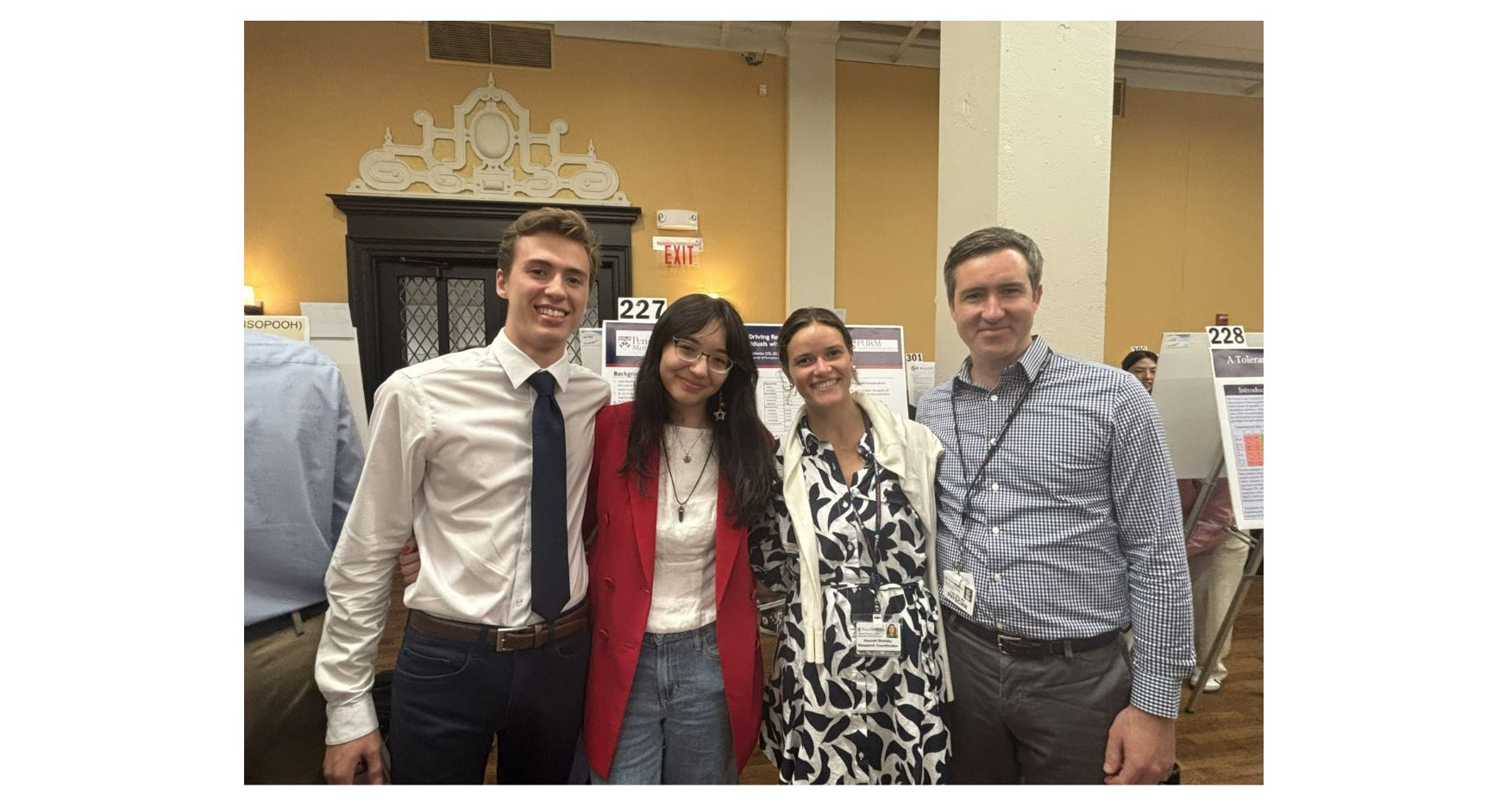
From left to right: Daniel Mysliwiec (‘28), a Neuroscience major, and Nathalie Mejia (‘27), a Biology major with Hannah Shalaby (Research Coordinator) and their mentor Dr. Colin Ellis (Department of Neurology. Together, they surveyed epilepsy patients to learn more about their daily lived experiences. This research was supported by the Penn Undergraduate Research Mentoring Program.
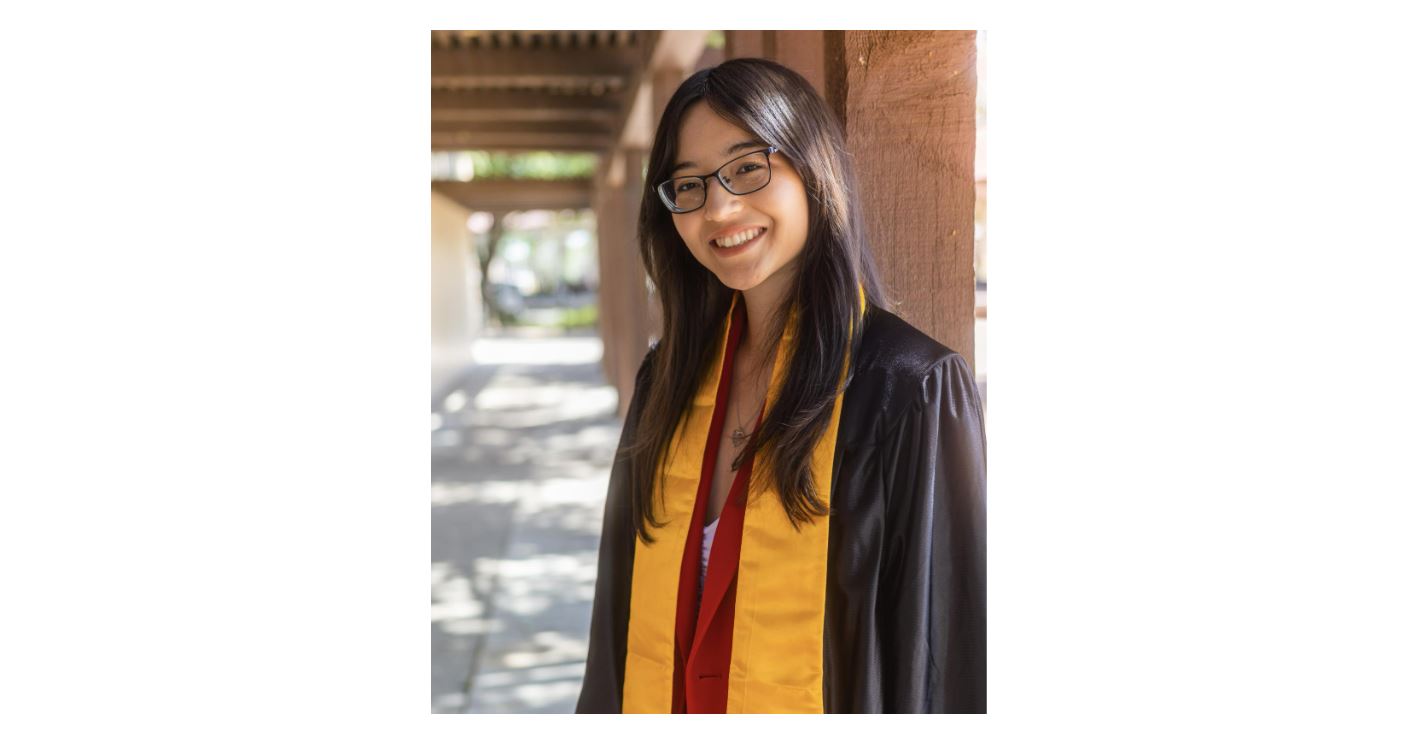
Reflecting on her research experience, Nathalie said, “The opportunity to provide a genuine, caring ear to our patients’ experiences with epilepsy was incredibly eye-opening and demonstrated why our research, and all research, is so important.”
This summer, I had the privilege of working with Dr. Colin Ellis in the Epilepsy Center at HUP. Our research focused on surveying patients about how epilepsy affects their ability to drive, as well as their quality of life. Individuals with epilepsy are restricted from driving, and this led to the question of how driving laws impact patient care, and if the law even works. We designed an anonymous survey that discreetly asks patients if they have ever driven when they weren’t supposed to. We also asked general questions about their relationship with their doctor and feelings about other limitations that come with epilepsy. I appreciated this holistic approach to patient care as it considers how epilepsy not only affects patients’ physical health, but also their autonomy and social lives.
The connections I made this summer were invaluable, and most definitely my favorite part of the whole experience. My research partner and I grew to be very close because we cooperated on every aspect of the research. From the start, all the staff at the clinic were very welcoming and enthusiastic about helping us. Our PI was particularly passionate about providing guidance and integrating us into the clinic. He maximized our experience this summer: taking us to other parts of the hospital, offering shadowing opportunities, and simply hanging out with us during our milkshake runs. It was a great environment to work in, and it made me think about the people I want to work with in the future.
The biggest takeaways from this experience were the interpersonal skills I developed. Every patient I approached was slightly different. Sometimes they were very talkative, sometimes they just needed someone who could help them through the survey. Being able to read the room and figure out how to best address the patient’s needs was a skill that I continuously improved. Even the brief connections with patients provided deep insight into the Penn (and Philadelphia) community. It was very rewarding to be able to be a part of patients’ lives and hear about their experiences.
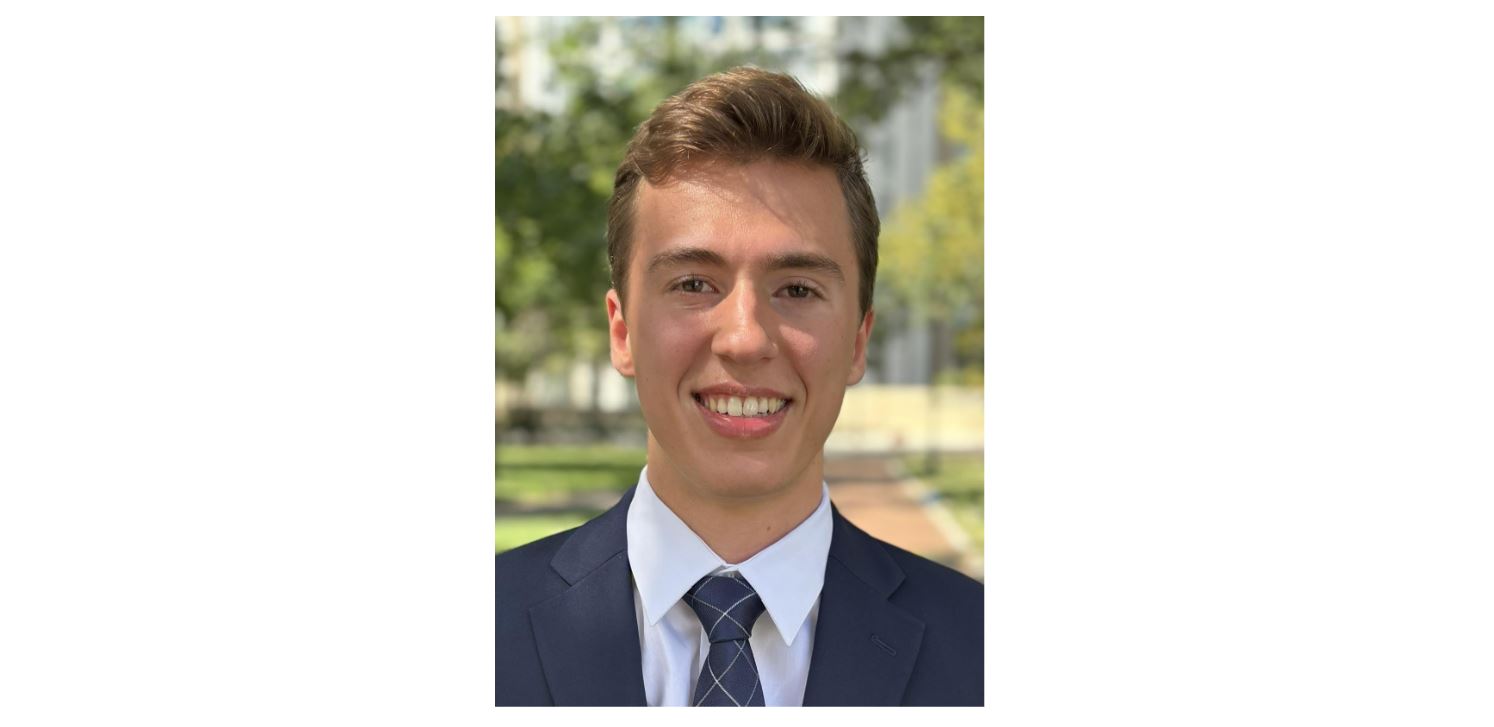
Reflecting on his research experience, Daniel said, “Anything can be enjoyable with the right people around you.” Read more about his experience below!
Over the summer, I worked in the neurology clinic at HUP, where we focused on the most pertinent problems that epilepsy patients face. I was drawn to the research because of the patient interaction aspect, along with the idea of constantly being surrounded by doctors every day. The most rewarding part of my experience was having meaningful conversations with each patient and being able to connect with them. Briefly taking their mind away from their struggles and having conversations with them about movies or songs showed me the importance of the humanistic side of medicine.
Along with creating relationships with each patient, I made lasting connections with the people I worked with. Bantering and having fun with my coworkers were moments that made each day enjoyable, no matter how long or challenging the day was. The neurology team was amazing and our mentor, Dr. Ellis, was a perfect mentor. He took the time to explain every step of the process to us in a manner that was both fun and digestible. I never felt embarrassed or scared to ask him any questions. He provided us with invaluable experiences, such as shadowing other doctors at CHOP, where I got to learn and see so many things in just a few days. He also took us for milkshakes every Friday where we moved the conversations away from medicine and just talked about our lives.
When it finally came to analyzing the data we had collected, I was faced with the greatest challenges of the research process. Seeing results that did not make sense and not understanding how to formulate my research question was confusing at first, but because I had a great team around me, I was able to learn important strategies in devising and working with a specific research question in mind. Overall, I am so grateful that I had such an amazing experience this summer.
Interested in reading more first-hand accounts about undergraduate research? Check out the other experiences featured on our Student News Page and Social Media!
Related Articles

Taking the Risk
Kevin Nhan (‘28), a Psychology and Design double major, researched the effectiveness of healthcare providers’ use of Project ImPACT strategies with mentorship from Dr. Melanie Pellecchia (Department of Psychiatry). This research was supported by the Penn Undergraduate Research Mentoring Program.
A Season of Growth
Ashley Spence (‘28), a Biochemistry major, studied how lysosomal repair could play a role in treating diseases. Ashley was mentored by Dr. Claire Mitchell (Department of Basic and Translational Science, Penn Dental), and this research was supported by the Penn Undergraduate Research Mentoring Program.