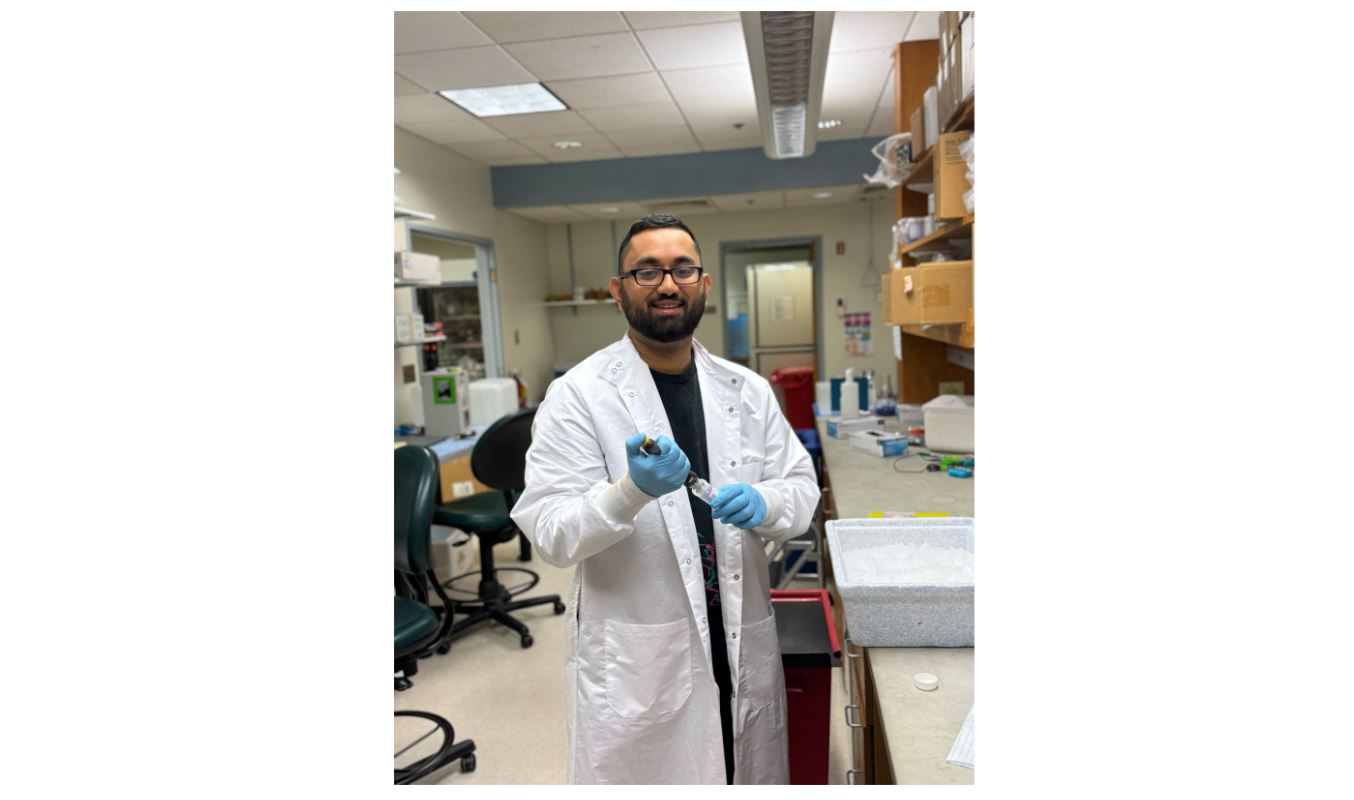
Jonmejoy Dhar (‘27), a Biochemistry major, conducted research on hemophagocytic lymphohistiocytosis (HLH), a genetic disorder characterized by immune system dysregulation and hyperinflammation. Jonmejoy was mentored by Dr. Scott Canna (Department of Pediatrics), and this research was supported by a Grant for Faculty Mentoring Undergraduate Research.
I conducted research with the Canna Lab to develop a test for familial hemophagocytic lymphohistiocytosis (HLH), a genetic disorder that causes hyperinflammation and immune system dysfunction. In my biology course, I found immunology and rheumatology topics most interesting, and I wanted to learn more about these fields by working with the Canna Lab. During several months in the lab, I learned a lot about the physiology and inner-workings of killer T-Cells.
I started working with my lab after spring break of my first year, but this past summer was the first time I had the opportunity to develop my own research question and work more independently in the lab. The work I did was a preliminary step in a much longer process that will hopefully culminate in a successful test for familial HLH. There were many bumps along the way, especially when it came to extracting and maintaining cells, measuring mRNA levels, and performing the cytotoxicity assay. These challenges were very different from the types of challenges you might face in a classroom. Often in a course setting, there is a predetermined answer or outcome that you navigate towards. In the lab, I had to acknowledge that despite all the work, the experiment might not be successful. Knowing this, I learned to keep meticulous track of all the steps in the process so we could troubleshoot if something went wrong. Through this process, I also learned how to be more direct and precise with what I was doing.
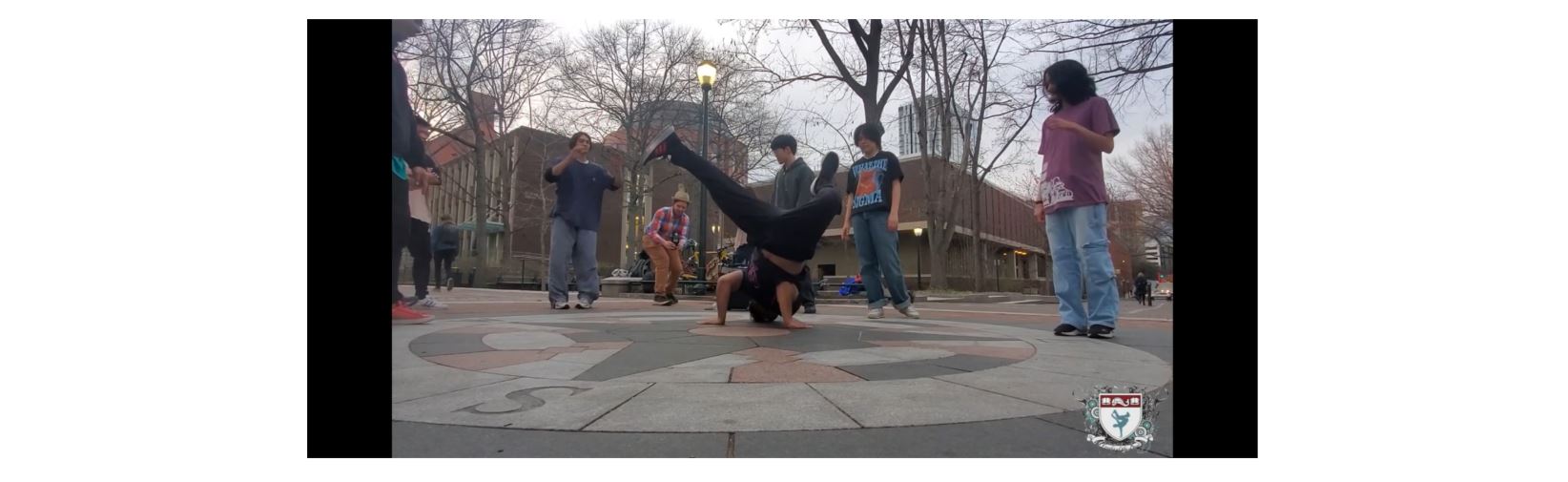
Outside the lab, I spent most of my time going to local events and sports games over the weekend and practicing with my friends at Penn's breakdancing club (pictured above). I also spent more time exploring Philly, seeing all the sites that I had yet to visit from my previous two years at Penn. Still, I think the most rewarding part of the summer was being given the reins, conducting the experiments with less supervision, and seeing the fruits of the process pay off at the end when I obtained successful results for the test. I’m incredibly thankful to my post-doc mentor Dr. Frank-Kamenetskii, who was patient as I navigated setbacks and helped me in countless ways throughout this research experience. Overall, conducting research was a very fulfilling and informative process, and I would absolutely recommend trying it.
Interested in reading more first-hand accounts about undergraduate research? Check out the other experiences featured on our Student News Page and Social Media!
Related Articles

More Than Just Robotics Research
Jeffrey Oduman (‘28), a Computer Science major, conducted robotics research with mentorship from Dr. Cynthia Sung (Department of Mechanical Engineering and Applied Mechanics). This research was supported by the Penn Undergraduate Research Mentoring Program.
When Voices Become Meaning
Ethan Yang (‘27) is a Mechanical Engineering and Applied Mechanics major currently pursuing a submatriculated Master of Science and Engineering (MSE) in Robotics. He conducted research on how humans interpret and perceive AI-generated audio with mentorship from Dr. Jianjing Kuang (Department of Linguistics). This research was supported by the Penn Undergraduate Research Mentoring Program.