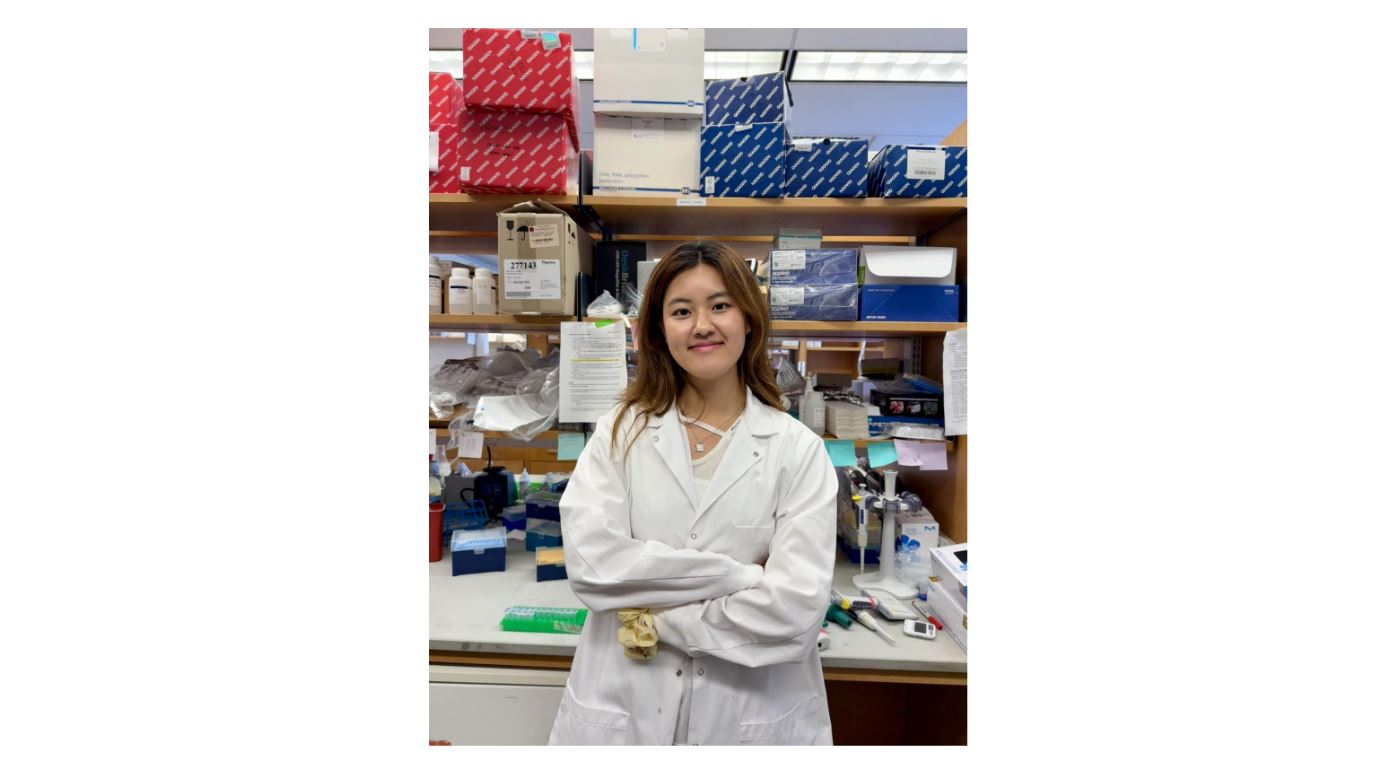
Kayla Kim (‘27), a Biochemistry and Biology double major, conducted research on how norovirus during infancy affects intestinal immune health with mentorship from Dr. Ken Cadwell (Department of Medicine). This research was supported by CURF Summer Research Funding.
Thanks to support from CURF, I had the opportunity to work in Dr. Ken Cadwell’s Lab in the Division of Gastroenterology and Hepatology. The lab studies the impact of infectious agents on the immune system towards the larger goal of understanding the origins of inflammatory bowel disease (IBD) and how to treat complex inflammatory diseases.
I investigated how early life environmental exposures shape our immune system and influence disease risk later in life. We encounter countless exposures as infants: our physical surroundings, the food we eat, psychological factors, infections, etc. I was particularly interested in studying early-life viral infections, which are common in newborns. One striking example is norovirus, a virus that is associated with food poisoning and intestinal symptoms. Norovirus affects up to 86% of infants within their first year of life.
With the guidance from my amazing mentor within the Cadwell Lab, Dr. Gavyn Bee, we set out to see what happens to the intestinal immune system when mice are infected with norovirus during infancy. The results were not what we expected. We often think of viruses as villains that wreck our immune system and make us sick. But in this case, we found the opposite: norovirus infection at infancy protected against intestinal injuries later in life. I identified that T-cells embedded in the lining of the gut are behind this protection, and even more excitingly, I found they release a protein called API5 (Apoptosis Inhibitor 5) that seems to be a key player.
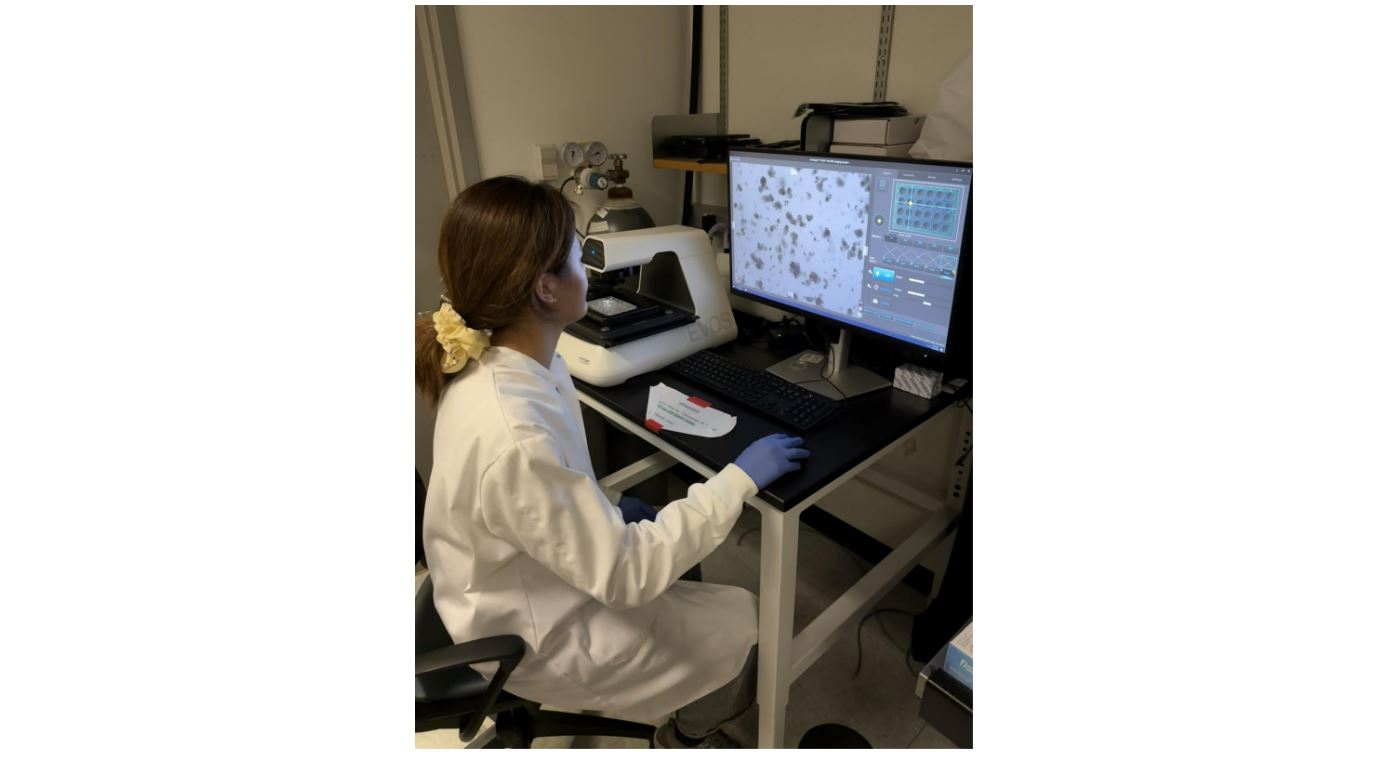
The most challenging (and dare I say, most fun) part of my experience was learning to think two steps ahead. My PI and mentor would often ask me, “Ok, say this worked or didn’t work, what next?” At first, I would be at a loss for words, but over time, I realized that instead of focusing on the success and failure of each experiment, the real value was learning how anticipating each outcome could contribute to the bigger picture. This shift pushed me to evaluate the purpose of each experiment in the broader context of the project, rather than becoming overly focused on individual results. I think this has helped me learn how to think more like a scientist—strategically, creatively, and with an eye toward the next question that moves the project forward.
Like any research project, there were many ups and downs, but this experience has shown me that those challenges are all part of the process—and they’re what make the small wins so much more rewarding. Having this past summer dedicated to research gave me the space to think critically about how to tackle these big questions, learn and test different tools and techniques to address them, design experiments, and troubleshoot when things didn’t work out. Through this process, I realized just how much fun I was having. Seeing the project start to come together was an amazing experience. Throughout the academic year, I’m continuing to investigate how API5 provides protection and which T-cell populations are responsible.
Interested in reading more first-hand accounts about undergraduate research? Check out the other experiences featured on our Student News Page and Social Media!
Related Articles

Lessons from Sri Lanka
Dania Maqbool (‘28), a Health and Societies major, traveled to Sri Lanka to study the local impact of education-focused NGOs with mentorship from Dr. Andria Johnson (Department of History and Sociology of Science). This research was supported by the Association of Alumnae Rosemary D. Mazzatenta Scholars Award.
Studies of Spinoza
Justin Miller ('26), a Religious Studies and Middle Eastern Languages and Cultures double major, conducted research on Benedict Spinoza, a 17th-century philosopher, and his use of Christian ceremonies in his model of national religion. He was mentored by Dr. Talya Fishman (Department of Middle Eastern Languages and Cultures) and supported by the University Scholars program.