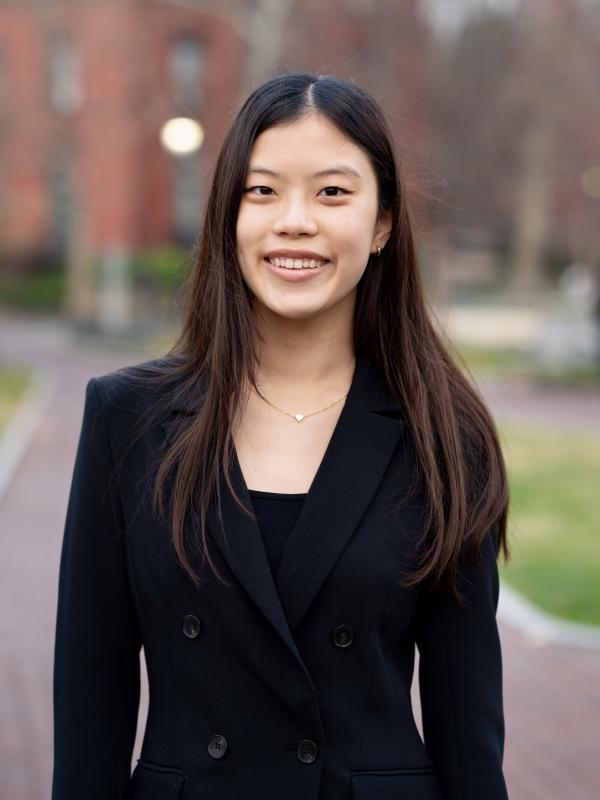
Yucheng Shao
I'm interested in the applications of machine learning in various sectors, including finance, neuroscience, and climate change. At Penn, I work in the Weber Lab using LSTM and CNN machine learning models to detect p-waves (brief peaks linked to brain state transitions) during sleep in both mice and humans, using EEG and LFP recordings. I have also conducted research under Professor Charles Yang in the Linguistics department, where I modeled how children learn pattern recognition using cognitive science principles. Previously, I have worked on research projects related to climate change, snowfall and weather prediction, and simulating space weather in the Earth’s magnetosphere. Outside of research, I’m a CIS 1200 TA, in Theta Tau, and involved with PennApps. Recently, I’ve been exploring software engineering through full-stack web development at a fintech company.
Autonomous Experimentation Development for Polymer Nanocomposite Research
This project integrates autonomous experimentation powered by AI to study process-structure-property relationships in polyelectrolyte-based polymer nanocomposites.
Cloud computing-based platforms in biomedical data science
Cloud computing for health and disease
Precise Genome Editing and Engineering for Human Health
We welcome highly motivated undergraduate researchers to work together!
Studying the dialogue between the microbiome and the immune system
Our lab studies the effect of the microbiome on the immune system in health, disease and therapy.
Machine Learning and Computational Marketing
I am seeking research assistants to help develop the next generation of tools for marketing analytics, including methods for learning consumer preferences from unstructured image, text, and video data, new solutions for modeling customer lifetime value, and advanced machine learning tools for optimizing marketing. This is a technical position that requires prior coding experience.
Basic Epilepsy Research: Exploring the Interface Between Neuroscience and Engineering
Join us to study how epilepsy develops using in vivo and in vitro models, along with engineering approaches.
Optical Functional Neuroimaging in Pediatric Disease Models
We use optical functional neuroimaging techniques (e.g., widefield optical imaging, diffuse optical tomography) to study biomarkers of neuronal injury in mouse and pig models. These techniques are similar to fMRI, but more portable to allow bedside imaging in acute injury.
AI-enhanced wearable biosensor system for objective and proactive mental healthcare
Current psychiatric practices for diagnosing mental illness based on consultation and questionnaires are intermittent and subjective in nature. Here, we propose to develop an AI-enhanced wearable system for real-time and quantitative assessment of mental health. Utilizing aptamer-based non-invasive biosensors integrated with wireless flexible electronic patches, our technology can provide continuous monitoring of biomarkers relevant to psychological states. Through advanced algorithms based on artificial neural networks, our system will allow superior sensitivity and specificity compared to traditional methods. Our goal is to achieve a clinically-deployable prototype with robust biomarker detection and algorithmic prediction capabilities, paving the way towards proactive mental healthcare.
Pediatric Anesthesiologist at CHOP Seeking Motivated Students Interested in Biomedical Research
Research position for motivated undergraduate student interested in topics on EEG signal processing, machine learning, biomedical informatics to improve outcomes, or hospital sustainability topics.