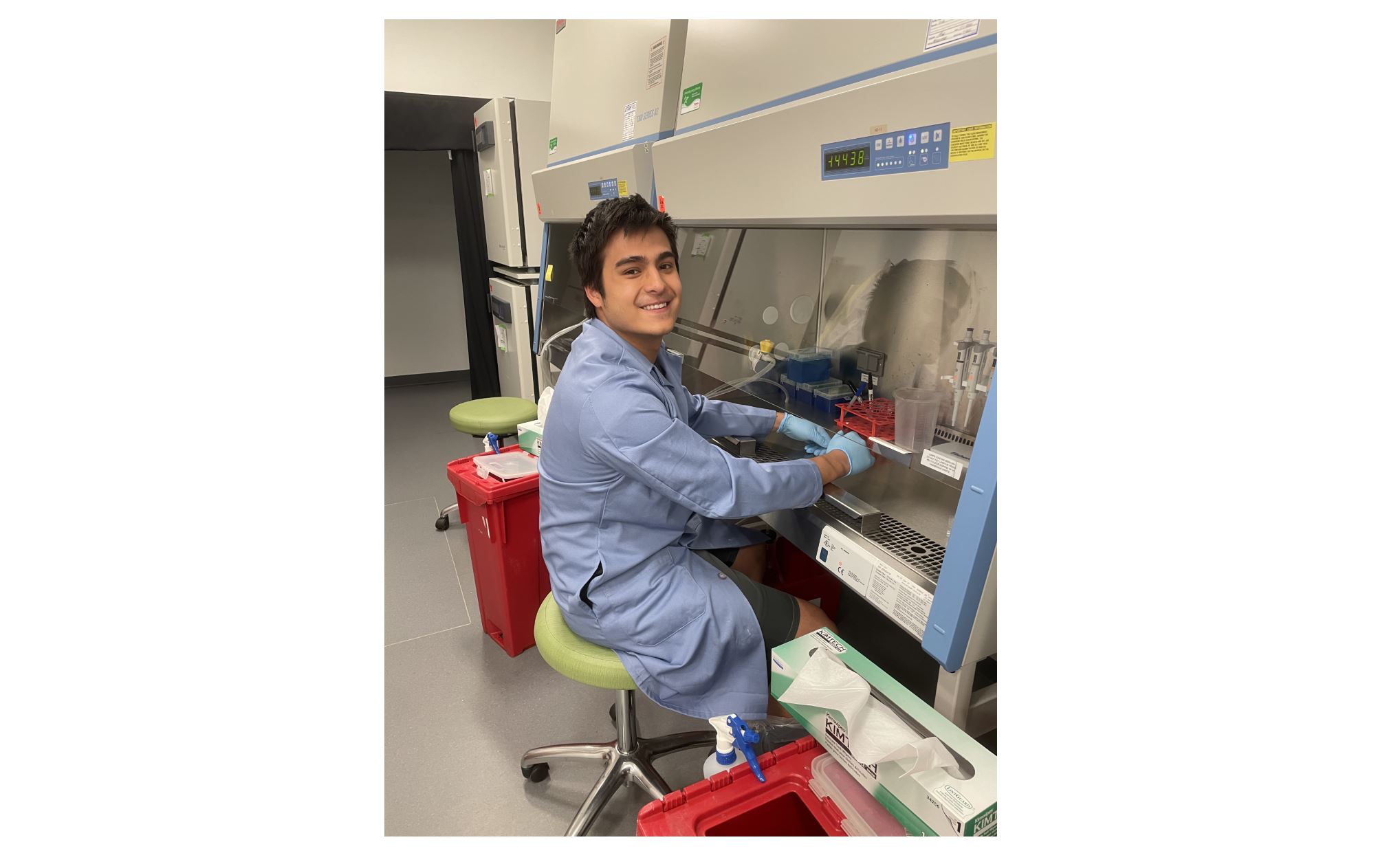
Ben Nachod ('26), a Bioengineering major, conducted research with Dr. Michael Mitchell (Department of Bioengineering) on the use of lipid nanoparticles to treat autoimmune diseases. This research was supported by the Vagelos Undergraduate Research Grant.
This past year, I conducted bioengineering research in the Mitchell Lab. My project focused on using lipid nanoparticles and mRNA technology to engineer Foxp3+ T cells for autoimmune applications. I’m interested in researching treatments for autoimmune diseases and allergies because of their widespread effect on the global population. Both of my grandmothers are affected by autoimmune diseases, and I see the draining impact that their diseases have on them. In the Mitchell Lab, we do research at the intersection of biomaterial science, drug delivery, and cellular/immune engineering research. I learned important techniques surrounding lipid nanoparticle synthesis, cell culture, and flow cytometry that I will continue to carry with me throughout my research career. Even more importantly, I learned how to think through the research process, planning experiments carefully and making sure that there is a distinct purpose to each step taken in my project.
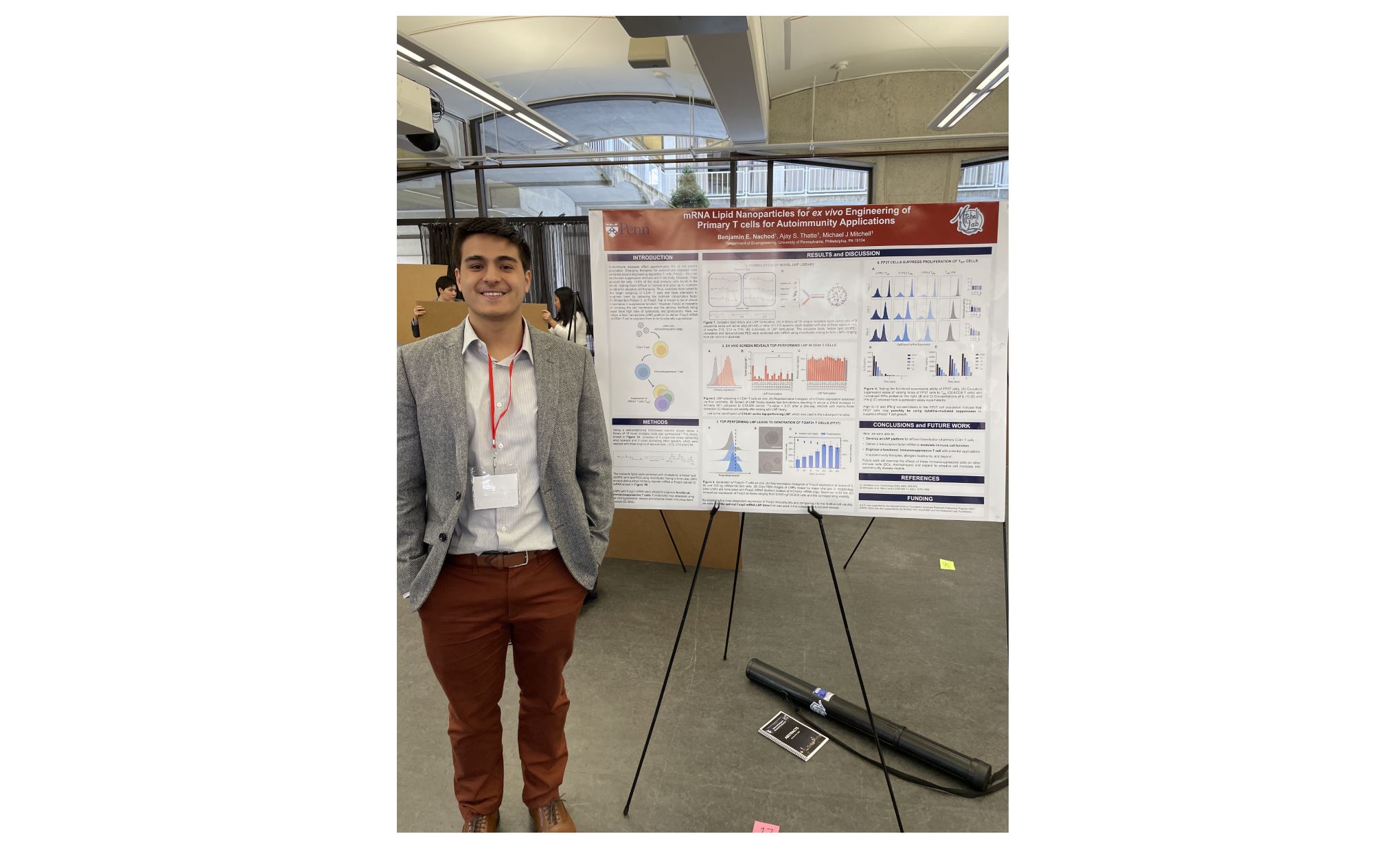
Through my research experience, I made valuable connections with leading researchers in my field, including PhD students, postdocs, and faculty. My mentor, Dr. Mitchell, provided unwavering guidance and support, offering valuable advice on my research, career, and personal life. I also established connections with the broader Penn community through collaborations with Penn Medicine faculty and staff, as well as within the engineering school. My research has opened doors for me to pursue connections with and seek guidance from other researchers who are working on projects adjacent to mine. The most rewarding aspect was sharing my research with the community at the CURF research symposium and at the National Collegiate Research Conference (photo below), which allowed me to present my findings and meet individuals interested in my work.
Conducting research has reinforced my interest in immune engineering and biomaterials research, aligning with my aspiration to become a physician-scientist and pursue basic science research in these fields. Through this journey, I discovered my enthusiasm for applying basic science skills to real-world clinical problems.
Interested in reading more first-hand accounts about undergraduate research? Check out the other experiences featured on our Student News Page and Social Media!
Related Articles

The Importance of Trying New Things
Sophia Jorgensen (‘26), a Neuroscience and Healthcare Management and Policy double major, studied time discounting, a psychological phenomenon that describes the decreased value that individuals assign to rewards the further away they are in time. Sophia was mentored by Dr. Joseph Kable (Department of Psychology), and this research was supported by a College Alumni Society Undergraduate Research Grant. Following graduation, Sophia started working in biopharmaceutical consulting at ClearView Healthcare Partners.
Everyone should do research!
Herinah Asaah (‘26), a Psychology major, conducted research on the effects of exclusionary discipline with mentorship from Dr. Allyson Mackey (Department of Psychology). This research was supported by the College Alumni Society Undergraduate Research Grant. After graduation, Herinah became a Fellow at the Netter Center for Community and Partnerships, working to strengthen youth development, and she plans to apply to law school next fall.