
Avia Weber (‘26), an International Relations and Psychology double major, studied the impact of artificial intelligence development programs led by the U.S. and China with mentorship from Dr. Valeriya Kamenova (Department of International Relations). This research was supported by the CURF Summer Research Funding Grant.
How nations provide data and infrastructure support to other governments can have long-term impacts on sovereignty and foreign policy. I am investigating how US-China competition and cooperation are put into practice and how lower-middle income countries navigate the pressures that can accompany these policies. My goal is to highlight how the US and China differ in their approaches to technology and artificial intelligence (AI) assistance programs, while also shedding light on recipient countries' experiences and responses.
With funding from CURF, I had the opportunity to conduct fieldwork in China for two weeks. Due to privacy restrictions, it was challenging to get information from the government directly, so I turned to the private sector to learn more about the dynamics of development aid. I learned that the Chinese government often assigns state-backed projects, like the AI assistance programs, to private companies to carry out. Conversations and site visits with private technology companies spearheading these initiatives gave me a clearer picture of how technology transfer and digital infrastructure are shaping not just economics, but also political alignment in recipient states.
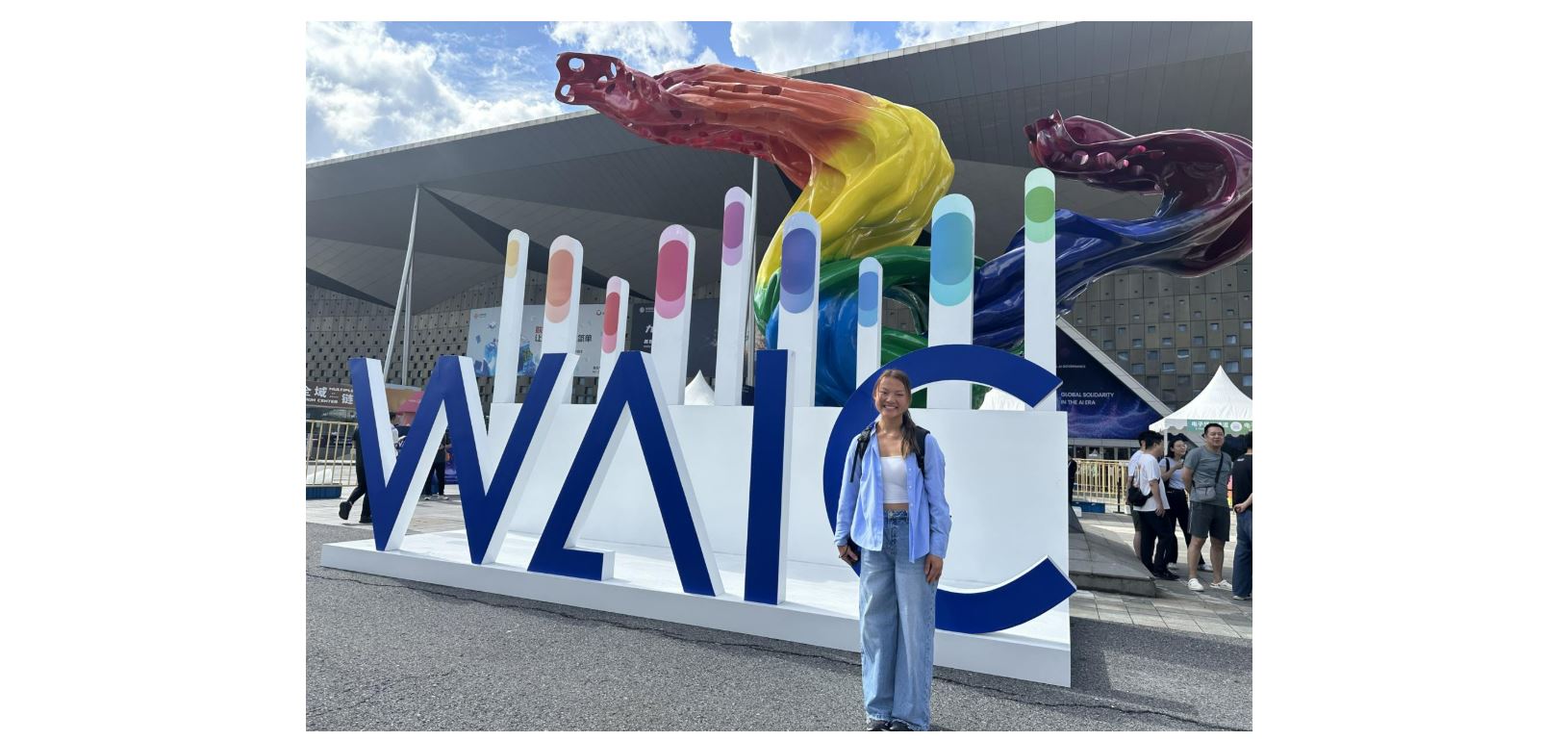
The most challenging aspect of my research was navigating the sensitivity surrounding AI in China. There were several moments when my intentions were questioned, and I was asked why, as an American, I wanted to learn more about Chinese programs. These exchanges revealed how deeply AI is entangled in geopolitical rivalry and emphasized the mistrust that defines much of the US-China relationship today.
Simultaneously, I saw that competition does not close off space for collaboration. While attending the World AI Conference in Shanghai, I witnessed a high-level dialogue between Craig Mundie, former Microsoft CEO, and former Ambassador Cui Tiankai, who served as Chinese Ambassador to the US from 2013 to 2021, where both emphasized the possibility of “win-win” cooperation in AI governance despite global tensions. Listening to this conversation showed me the importance of building trust and creating frameworks for shared responsibility.
This experience helped me develop skills in cross-cultural research, fieldwork, and navigating politically sensitive contexts. By conducting interviews and attending events in China, I learned to question the preconceived notions and stereotypes I had developed growing up in American society. I learned to communicate with nuance by analyzing the overlap between private sector initiatives and state policies in AI governance. I also learned how to balance sensitivity with discovery. After my combined research and conference experiences, I am more convinced that collaborative governance is not just possible but necessary to shape the future of AI.
Interested in reading more first-hand accounts about undergraduate research? Check out the other experiences featured on our Student News Page and Social Media!
Related Articles

Creating Lasting Connections
From left to right: Daniel Mysliwiec (‘28), a Neuroscience major, and Nathalie Mejia (‘27), a Biology major with Hannah Shalaby (Research Coordinator) and their mentor Dr. Colin Ellis (Department of Neurology. Together, they surveyed epilepsy patients to learn more about their daily lived experiences. This research was supported by the Penn Undergraduate Research Mentoring Program.
Combining Data, Culture, and Connection
Belinda Chen, Debby Li and William Xi conducted research on factors affecting well-being among Chinese Americans. They were mentored by Dr. Effy Zhiyuan Yu from the Department of Family and Community Health. This research was supported by the Penn Undergraduate Research Mentoring Program.