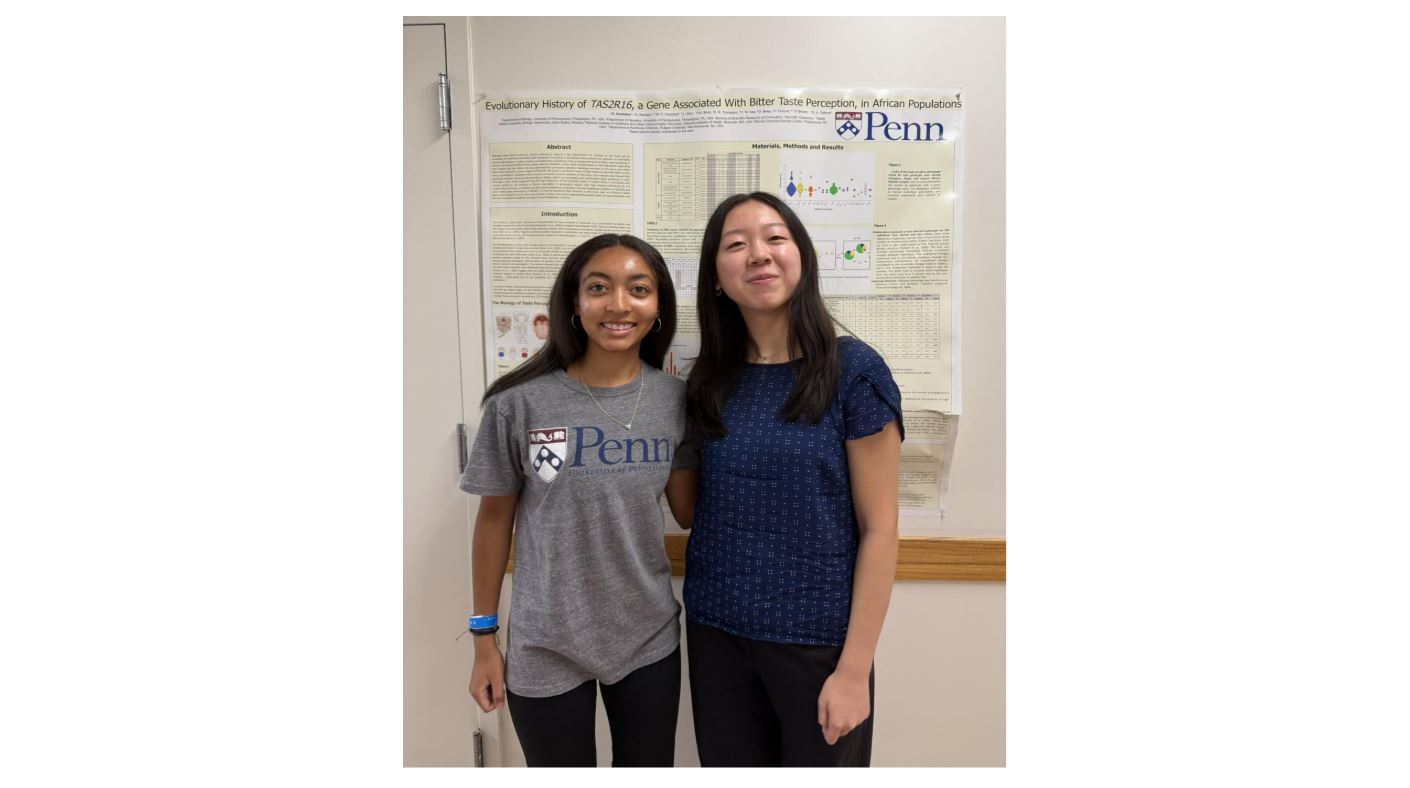
Jailyn Cardwell (left) and Alicia Zhang (right) investigated genetic and phenotypic variations in ethnically diverse populations in Africa with mentorship from Dr. Sarah Tishkoff (Department of Genetics and Biology). This research was supported by the Penn Undergraduate Research Mentoring Program.
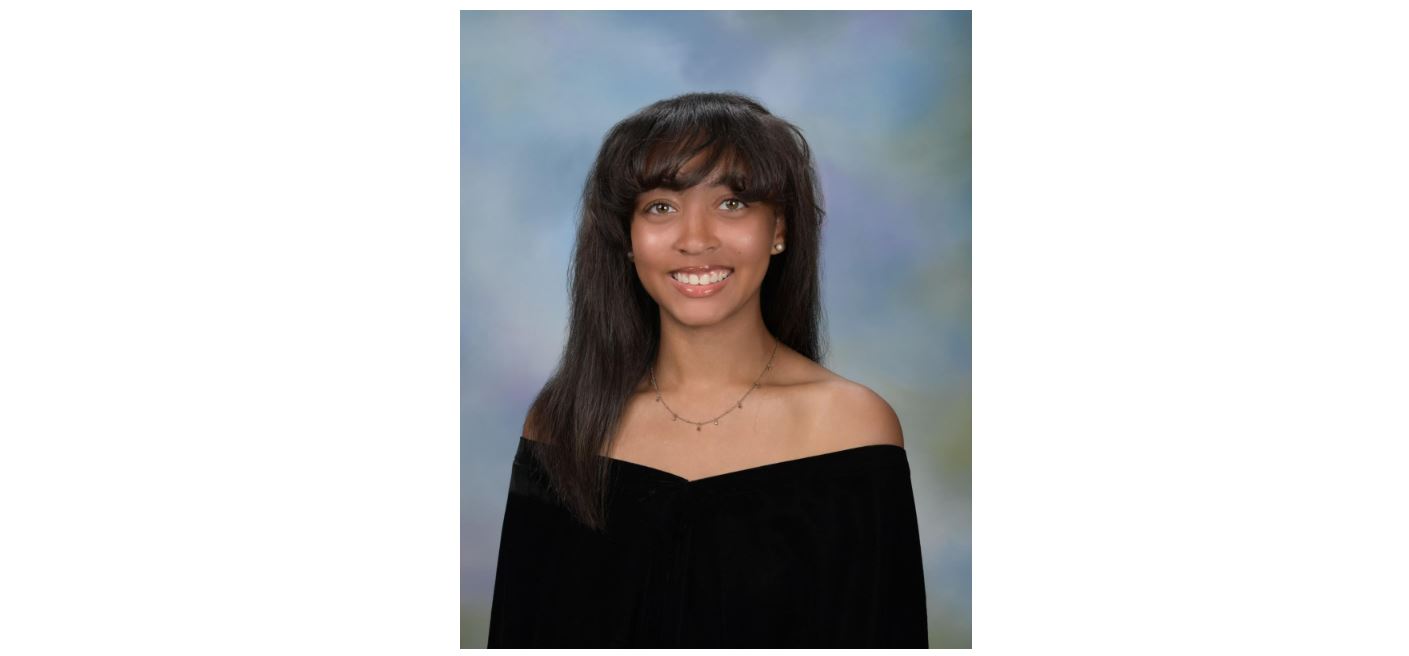
Jailyn Cardwell (‘28), a student in the College of Arts and Sciences, reflected that “PURM has allowed me to face my fear of failure and grow into a person who is ready to take on more challenges in the future.”
The Tishkoff Lab researches genetic and phenotypic variations in ethnically diverse populations in Africa. As an African American, this was a topic that I was particularly interested in exploring more. Every day I learned something new, and that was what I enjoyed the most about this experience. Although it was grueling at some points, I knew it would pay off in the end.
While the first couple of weeks were primarily focused on reading, I soon began learning how to code. Learning this new skill was perhaps the most challenging experience of my entire academic career to date. During this time, I dreaded going to the lab. As the summer progressed, I began to realize I felt this way because I was dealing with imposter syndrome. I was embarking on a whole new journey, studying entirely unfamiliar subjects in a field I had no experience with, and that terrified me. However, I kept showing up and learned that, in order to grow, I needed to lean into the discomfort. By the end of the summer, I still had a lot to learn, but I am proud of myself for figuring out how to persevere and overcome obstacles.
One of the most memorable moments of the summer was correctly coding my first plot. Although this might seem quite simple, I struggled with it for what felt like forever, and I am still amazed I was able to achieve this goal. I realized that I can do anything I put my mind to, no matter how difficult the problem. The support that my mentor gave me during this time pushed me forward. My mentor always emphasized how great I was doing while also giving me beneficial constructive criticism. This support made my research experience even more valuable.
What I have learned from this experience is simple: I must step into new realms of discomfort to succeed. I always knew this, but I was truly exposed to it this summer. Applying to Penn: I stepped into a place of uncertainty, and it worked out for me. My first semester at Penn: I was nervous to reach out and make friends while trying to balance my classes. Now I have amazing friends, and I found a routine that works for me. There are many more examples, but these are ones that have most impacted my life. This summer research experience is another I can add to the list. There will be many more experiences like this, but I realize failure is a way to grow exponentially.
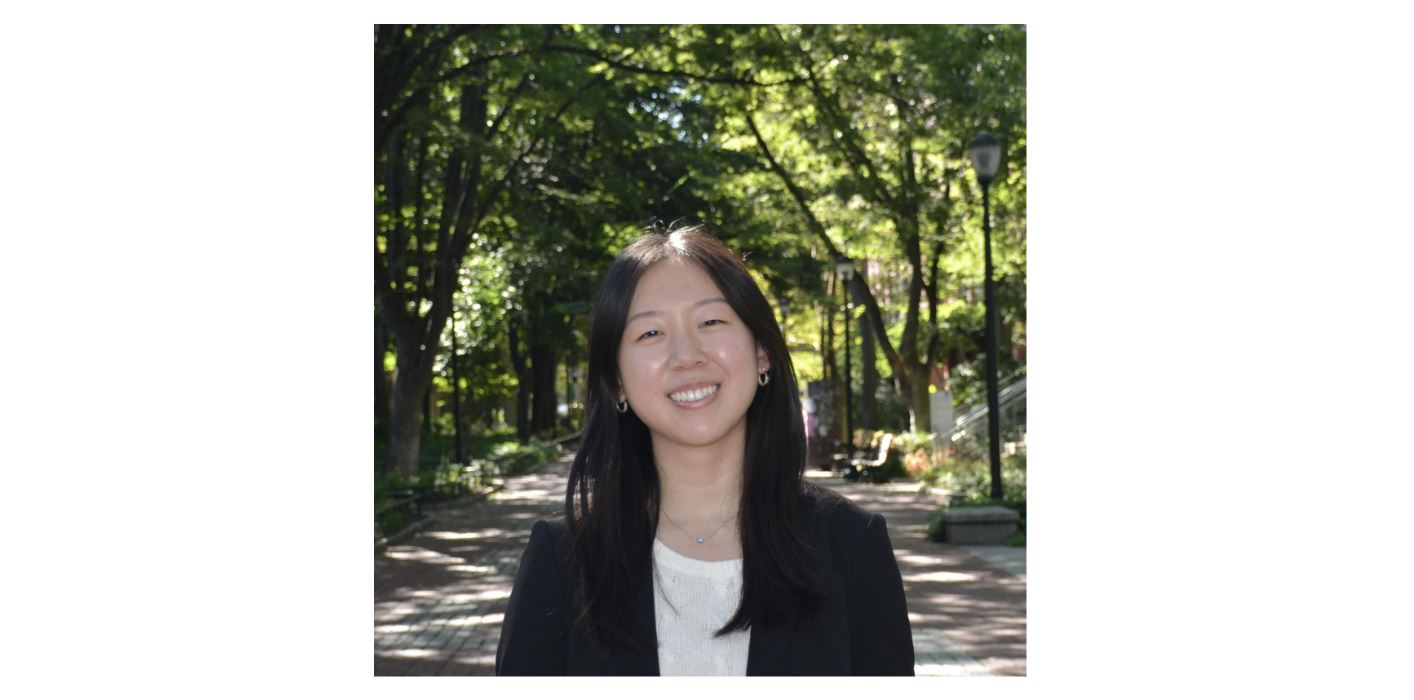
Alicia Zhang (‘27), a Biology major, reflected that “PURM is an amazing opportunity to gain exposure to that research field that you’ve always been curious about, be part of an environment that fosters proactive learning, and explore the culture and excitement of a Philly summer!”
Throughout my time in Philly, amidst a culturally and academically diverse community, I have cherished the opportunity to learn more about health disparities. While volunteering has helped me understand the realities of healthcare inaccessibility for marginalized populations, I also became curious about how inequalities manifest at the research level. The Tishkoff Lab works to address the disparity of human genomic studies in African populations by investigating the genetic and phenotypic variation of ethnically diverse Africans, and I am grateful to have joined such meaningful and interesting lab work. Throughout this summer, I learned how to apply computational techniques in the life sciences, while continuously learning about how each discipline of the Tishkoff Lab– field work, lab work, and computational work– integrate to drive discovery.
With this past summer being my first time working in a lab setting, I was initially worried about meeting expectations for background knowledge and skills. I wondered, with everyone having such busy schedules, how could they possibly have time to help a student learn? However, in my first few weeks, and through conversation with other PURM students, I quickly realized the wonderful part about this program: every lab involved is filled with PIs, mentors, and researchers that are incredibly supportive of the learning process for first-time researchers. I learned the value of upholding my curiosity, asking intentional questions when collaborating with mentors and peers, and investigating further when I was researching by myself. My experiences this summer reaffirmed that even in the face of unfamiliarity, there are great opportunities for growth through building upon resources and support.
While I have found the problem-solving in computer science classes at Penn very engaging, the classes I took never overlapped with the coursework of my life sciences major. Through this summer’s project, I had the chance to develop fundamental skills in computational biology research, learning to conduct data analyses, graphing, statistical tests, and genetic association analyses. While I have learned that research is not as clear-cut as classes are, it offers an opportunity to explore the intersection of different fields of interest. You don’t have to pick just one interest! I look forward to continuing my current project, expanding my skills as I focus on new genetic analyses, and I’m excited to use these skills in other areas of research.
Interested in reading more first-hand accounts about undergraduate research? Check out the other experiences featured on our Student News Page and Social Media!
Related Articles

An Organization Built on Partnerships
Alyma Karbownik (‘29), an International Relations and Environmental Studies double major, was an intern for Historic Germantown, a partnership of 20 historic houses, destinations and museums in Northwest Philadelphia dedicated to preserve and share some of Philadelphia’s prized historical assets. This internship was supported by the Summer Humanities Internship Program.
Applying Computer Science in a Molecular Ophthalmology Lab
Rushil Patel (‘28), a Computer Science major, utilized computer science skills to design specialized gene panels to study neurogenerative diseases with mentorship from Dr. Yuyan Cheng (Department of Ophthalmology). This research was supported by CURF Summer Research Funding.