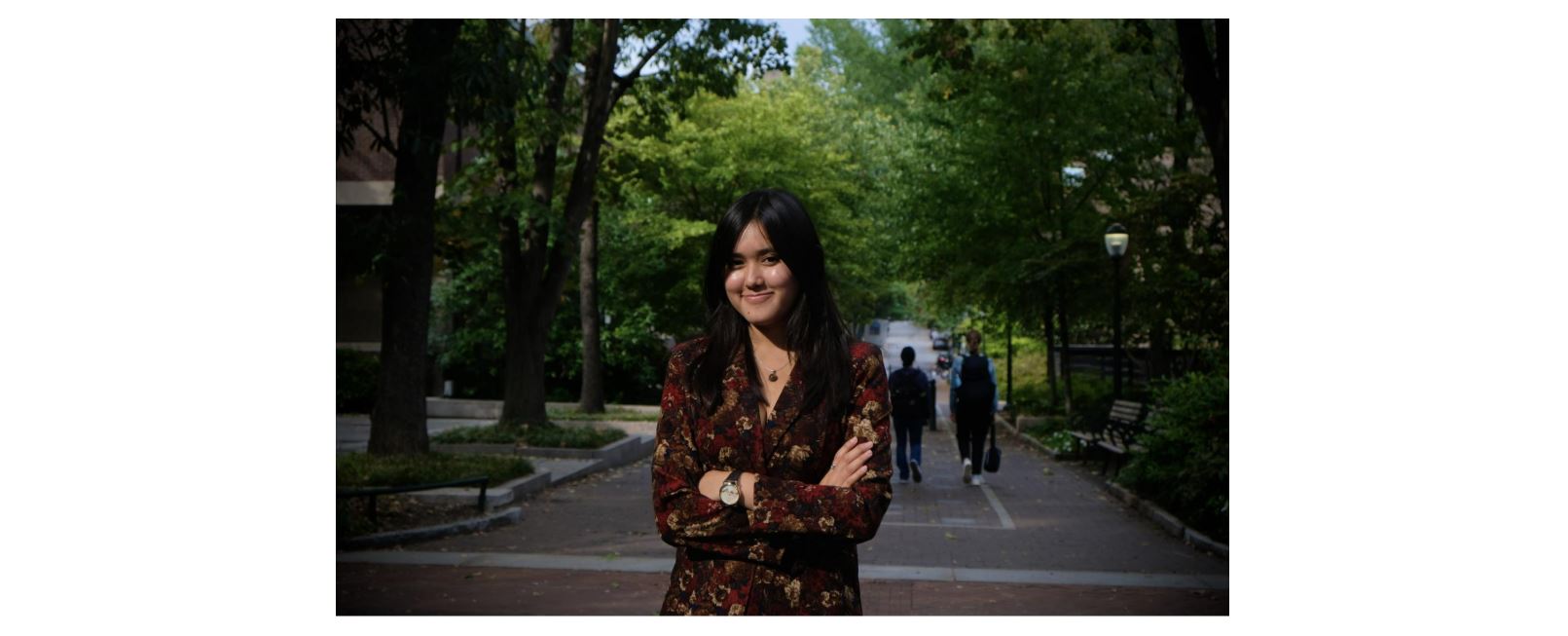
Rodin Bantawa (‘27), a Psychology major, studied the intersections between identity, belonging, and colonialism with mentorship from Dr. Megan Robb (Department of Religious Studies). This research was supported by the Penn Undergraduate Research Mentoring Program.
Last summer, with mentorship from Professor Megan Robb, I researched the life of Sharaf un-Nisa, a Mughal woman who married an East India Company officer and moved to England in the late eighteenth century. I was drawn to this project because of my interest in histories of identity, belonging, and colonialism. Growing up in Nepal, I learned a lot about the impacts of colonialism in South Asia, but textbooks always made history feel like a straight line—colonialism happened, people resisted, and eventually the British left. By contrast, this experience taught me that history is far more complicated, uncovering the multilayered lives of women, children, and families caught between empires. This research opened my eyes to the stories waiting to be found in letters, diaries, and records. These documents tell stories of not only politics, but also of love, loss, and survival.
My day-to-day activities involved transcribing letters and preparing an exhibit post for the Unstable Archives, a website that shares sources related to Sharaf un-Nisa. I chose to focus on how the identities and futures of mixed-race children shifted as the colonial era progressed. Reading case studies of these families showed me how deeply race and belonging shaped their lives.
The process was slow, but surprisingly exciting. Some days I would spend hours struggling through a single page of handwriting but then stumble down a fascinating rabbit hole. The best part was discussing these discoveries with Professor Robb and my fellow researcher. Those conversations reminded me that research isn’t solitary. It grows through exchange and collaboration.
Professor Robb didn’t just give us tasks; she taught us how to think like researchers. She shared stories from her own archival visits in England and India, where she was working during the summer. She would write about how she decided what to look at, how to prepare before going into an archive, and what questions to ask of the materials. Her guidance made the research process feel less intimidating and more like a set of skills I could learn and practice.
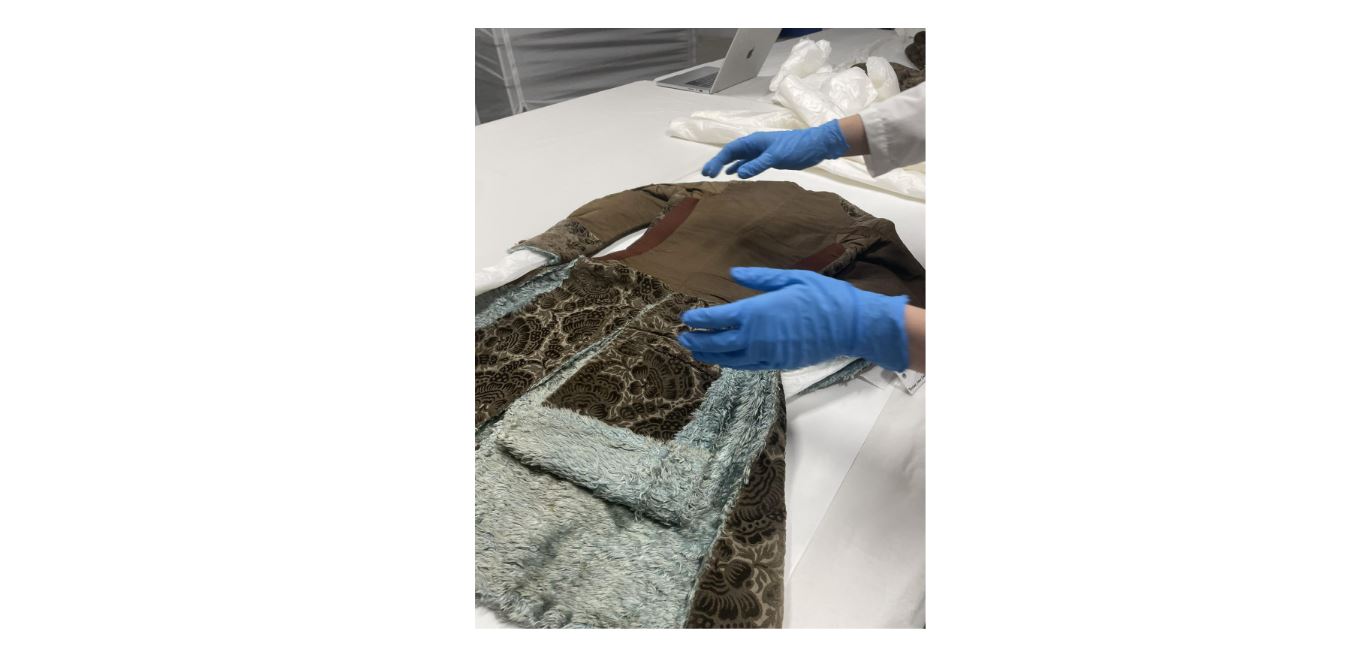
All of this came together when we went on our own archival visit to the Metropolitan Museum of Art’s storage facility in New York to see a 300-year-old coat associated with G. G. Ducarel, Sharaf un-Nisa’s husband. We went in convinced it was his coat, but after talking with the staff and examining the style closely, we realized it belonged to an earlier generation, likely his father’s. That moment changed how I thought about research, showing me the importance of questioning assumptions and being open to surprises. It also deepened my appreciation for material culture: how fabrics are preserved, what styles were common in each era, and how clothing carries meaning. That single object helped me think about history in a more layered way, where context matters as much as the artifact itself.
This summer taught me patience, curiosity, and the joy of piecing together forgotten stories. It showed me that history isn’t just an abstract timeline; it’s full of lives, details, and choices that continue to shape us today.
Interested in reading more first-hand accounts about undergraduate research? Check out the other experiences featured on our Student News Page and Social Media!
Related Articles

Lessons from Sri Lanka
Dania Maqbool (‘28), a Health and Societies major, traveled to Sri Lanka to study the local impact of education-focused NGOs with mentorship from Dr. Andria Johnson (Department of History and Sociology of Science). This research was supported by the Association of Alumnae Rosemary D. Mazzatenta Scholars Award.
Learning to Think Like a Scientist
Kayla Kim (‘27), a Biochemistry and Biology double major, conducted research on how norovirus during infancy affects intestinal immune health with mentorship from Dr. Ken Cadwell (Department of Medicine). This research was supported by CURF Summer Research Funding.